
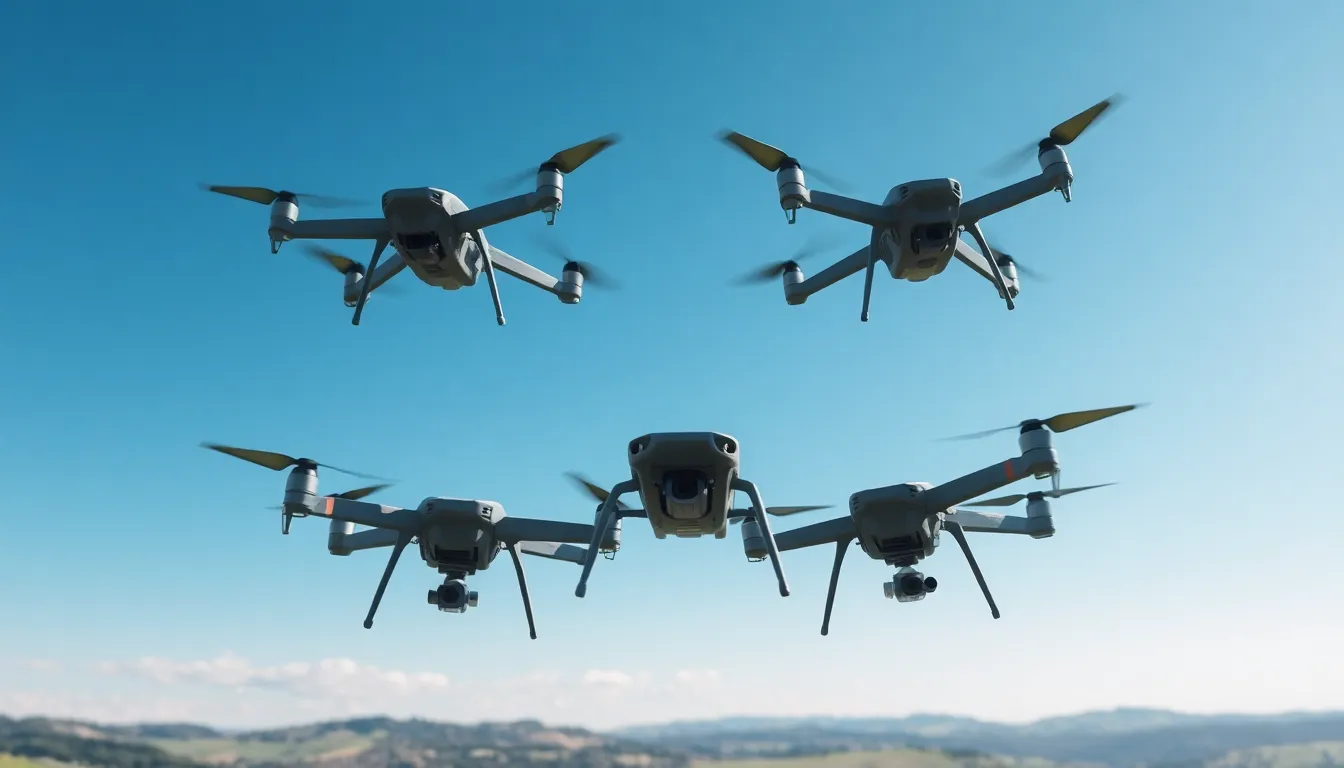
Quadcopter drones have taken the world by storm, transforming how people capture images, explore landscapes, and even conduct business. With their four rotors and advanced technology, these versatile flying machines offer stability and maneuverability that make them accessible to hobbyists and professionals alike.
From breathtaking aerial photography to innovative agricultural applications, quadcopters are redefining possibilities across various industries. As enthusiasts and businesses continue to embrace this technology, understanding the features and capabilities of quadcopter drones becomes essential for anyone looking to soar to new heights.
Overview of Quadcopter Drones
Quadcopter drones feature four rotors, providing enhanced stability and control during flight. These drones utilize a quadrotor configuration that allows for vertical takeoff, landing, and precise hovering capabilities. Their design supports various applications, from recreational use in photography to essential roles in agriculture and surveillance.
Key features of quadcopters include:
- Flight Stability: Quadcopters maintain steady flight by distributing weight evenly across all four rotors. This stability allows for smooth aerial footage and accurate control during maneuvers.
- Agility: Quadcopters can perform quick lateral movements, enabling them to navigate challenging environments. Their design permits agile turns and rapid responses to pilot commands.
- User-Friendly Control Systems: Most quadcopters use remote controllers or smartphone apps, simplifying operation for beginners and experts alike. These systems often include features such as GPS positioning and automatic return-to-home functions.
- Payload Capacity: Many quadcopters come with the ability to carry additional equipment, such as high-definition cameras or sensors, enhancing their functional versatility across different sectors.
- Affordability: The increasing availability of quadcopters has led to a wide range of price points, making them accessible to both hobbyists and businesses.
Quadcopters continue to evolve in functionality and application, making them a vital component in the evolving landscape of aerial technology. Understanding their features allows users to select the appropriate model for their specific needs, whether for leisure or professional use.
Types of Quadcopter Drones
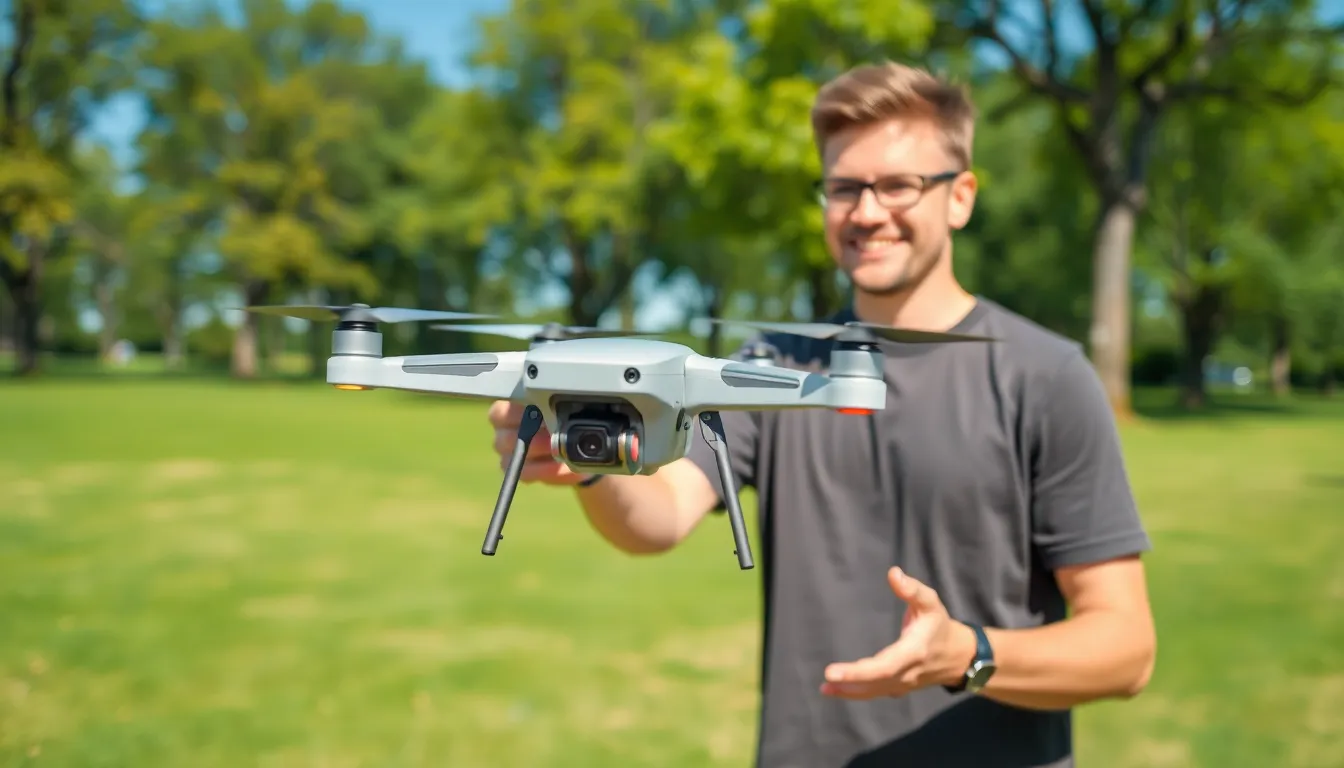
Quadcopter drones come in various types, catering to different interests and purposes. Understanding these types aids users in selecting the right model for their needs.
Hobbyist Quadcopter Drones
Hobbyist quadcopter drones are designed for recreational use. They often feature lightweight frames, simplified controls, and varying flight times. Key characteristics include:
- Affordability: Prices range from $50 to $500, making them accessible for casual users.
- Ease of Use: Simplistic control systems benefit beginners and casual flyers.
- Variety in Features: Drones may include basic cameras, LED lights, or customizable modifications.
- Limited Range: Typical flight ranges extend from 300 to 3,000 feet, suitable for local flying.
- Durability: These drones tend to withstand minor crashes due to their lighter designs.
Professional Quadcopter Drones
Professional quadcopter drones serve industries such as photography, agriculture, and surveillance. They offer advanced capabilities and superior technology. Important aspects consist of:
- Higher Cost: Prices generally vary from $500 to over $5,000, reflecting advanced features.
- Enhanced Camera Systems: Many models support high-resolution cameras, enabling aerial photography and videography.
- Increased Flight Time: Flight durations often extend from 20 to 60 minutes, facilitating extended operations.
- Greater Payload Capacity: These drones can carry additional equipment, such as thermal imaging devices or sensors for data collection.
- Advanced Navigation Systems: Features like GPS and obstacle avoidance enhance stability and safety during flight.
Understanding these distinctions helps users make informed choices based on their needs and applications.
Key Features of Quadcopter Drones
Quadcopter drones possess several essential features that enhance their functionality and user experience. Understanding these features allows users to select the right drone for their specific needs.
Flight Time and Battery Life
Flight time and battery life significantly influence a quadcopter’s usability. Most hobbyist quadcopters offer flight times between 6 to 20 minutes, depending on conditions and battery capacity. Professional models typically provide longer flight times, ranging from 20 to 40 minutes. Battery life varies between lithium-polymer (LiPo) options, with higher capacity batteries delivering extended usage. Quick recharging options are available, further optimizing time spent in the air.
Camera Quality and Stability
Camera quality and stability are crucial for capturing high-quality images and videos. Many quadcopters come equipped with integrated cameras that range from basic HD to advanced 4K systems, catering to various user needs. Optical image stabilization features enhance footage quality, reducing unwanted vibrations. Gimbals, often included in professional models, offer additional stability by adjusting camera angles during flight, ensuring smooth capturing even in challenging environments.
Range and Control
Range and control define how far and effectively a user can operate a quadcopter. Typical ranges for hobbyist models vary from 100 to 1,500 meters, while professional quadcopters can achieve distances up to 5 kilometers or more. Control systems often utilize Wi-Fi, radio frequency, or GPS for reliable connectivity. User-friendly remote controls and mobile app interfaces enhance operation ease, providing features like GPS tracking and automated flight modes for both novices and seasoned operators.
Advantages of Quadcopter Drones
Quadcopter drones offer several advantages, contributing to their growing popularity across various sectors.
- Stability: The four-rotor design enhances flight stability, allowing for smooth and controlled movements. This balance is critical for activities such as aerial photography.
- Maneuverability: Quadcopter drones possess high agility, vital for navigating tight or challenging environments. Their ability to change direction swiftly makes them suitable for both indoor and outdoor use.
- User-Friendly Control Systems: Many quadcopters come with intuitive control interfaces, making them accessible for beginners. Features like one-button takeoff and landing simplify the flying experience.
- Payload Capacity: Quadcopter drones can carry various payloads, including cameras and sensors. This flexibility allows users to adapt drones for specific applications, from surveying to filming.
- Affordability: The price range of quadcopters makes them accessible to a broad audience. Hobbyist models typically range from $50 to $500, while professional options start around $500 and can exceed $5,000, catering to diverse budgets.
- Battery Life and Flight Time: Hobbyist quadcopters offer flight times from 6 to 20 minutes, while professional models achieve 20 to 40 minutes. This enhanced endurance supports longer missions and more extensive coverage.
- Camera Quality: Many quadcopters have built-in cameras with varying resolutions, from HD to 4K. This high-quality imaging capability is essential for applications in photography and videography.
- Operational Range: Hobbyist models provide operational ranges between 100 and 1,500 meters, while professional counterparts can extend up to 5 kilometers or more. This range allows for more extensive exploration and monitoring capabilities.
These advantages position quadcopter drones as effective tools for enthusiasts and professionals, supporting a wide array of applications.
Popular Quadcopter Drone Models
Numerous quadcopter drone models cater to various needs and budgets. Here’s a look at some popular options.
DJI Mini 2
- Weighs under 250 grams, making it ultra-light and easy to transport.
- Features 4K camera capabilities for high-quality imaging.
- Offers a flight time of up to 31 minutes.
- Can transmit video up to 10 kilometers.
DJI Mavic Air 2
- Includes a 48 MP camera with 4K video recording at 60 fps.
- Provides intelligent shooting modes like SmartPhoto for enhanced photography.
- Offers a flight time of 34 minutes with up to 18.5 kilometers of video transmission range.
- Equipped with obstacle sensors on all sides for enhanced safety.
Autel Robotics EVO Lite+
- Delivers 50 MP camera performance with 6K video capabilities.
- Features advanced flight modes such as follow-me and waypoint navigation.
- Offers up to 40 minutes of flight time.
- Can transmit video up to 12 kilometers, outperforming many competitors.
Parrot Anafi
- Weighs only 320 grams, making it suitable for portable use.
- Offers a unique 180-degree camera tilt for versatile shooting angles.
- Provides 4K HDR video capabilities with 21 MP photo resolution.
- Delivers a flight time of 25 minutes.
Holy Stone HS720
- Designed for hobbyists, featuring a 4K camera with a 90-degree adjustable angle.
- Includes GPS-assisted flight for improved stability and positioning.
- Offers up to 26 minutes of flight time with a transmission range of 1,000 meters.
- Features an easy-to-use app for controlling flight and camera functions.
These models represent a mix of user-friendly options for hobbyists and advanced features for professionals, consolidating the appeal of quadcopter drones across demographics.
Quadcopter drones have transformed the way people engage with technology in various fields. Their unique design and advanced features not only enhance stability and control but also make them versatile tools for both hobbyists and professionals. With a broad range of models available at different price points, there’s a quadcopter for everyone.
As technology continues to advance, the capabilities of these drones will only improve, paving the way for innovative applications in photography, agriculture, and beyond. Embracing quadcopter drones means tapping into a world of creativity and efficiency that can elevate any project or hobby to new heights.


