
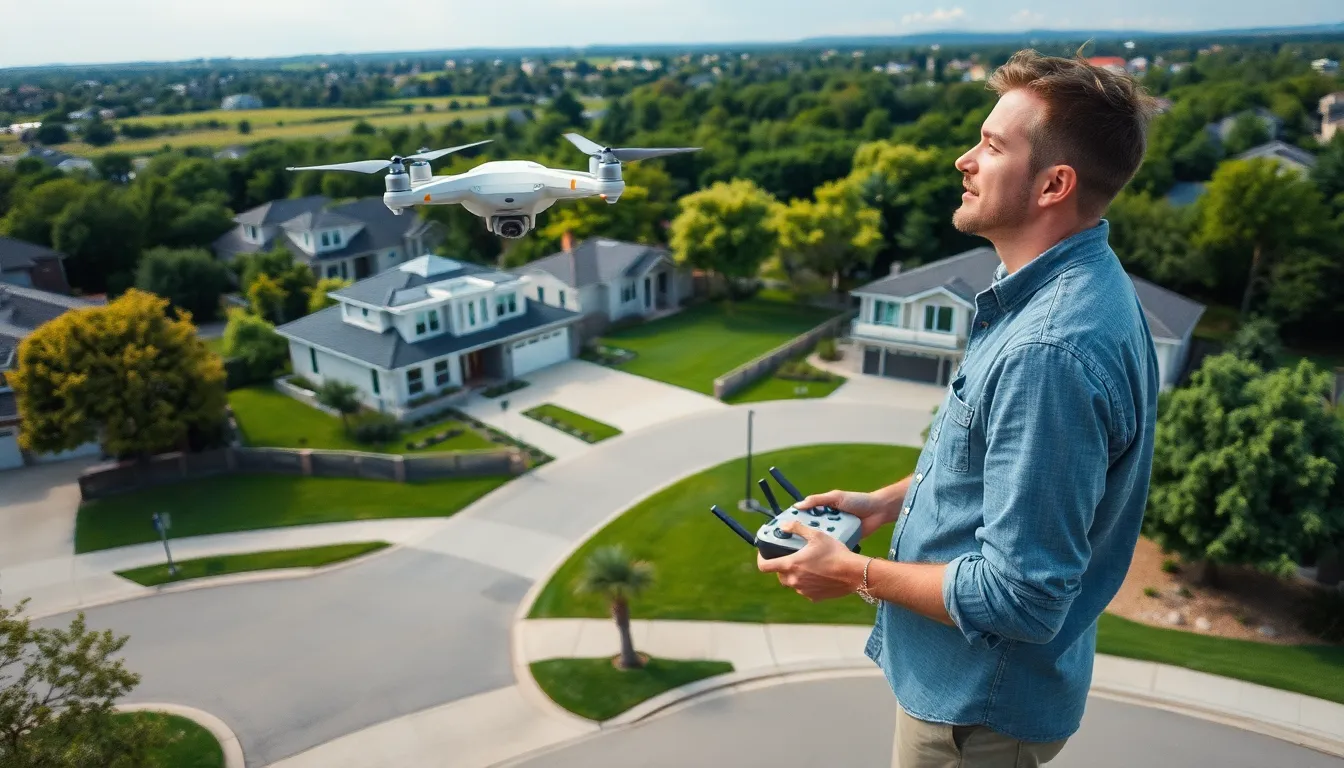
In today’s fast-paced real estate market, standing out is more crucial than ever. Enter drones—those flying gadgets that make you feel like a secret agent while capturing stunning aerial shots of properties. With a bird’s-eye view, these high-tech marvels showcase homes like never before, turning ordinary listings into must-see destinations.
Imagine potential buyers scrolling through listings and stopping dead in their tracks, mesmerized by breathtaking images that reveal every angle of their future dream home. Drones not only elevate the visual appeal but also save time and effort, making real estate photography as easy as pie—if pie could fly. As the industry embraces this innovative technology, it’s clear that using drones isn’t just a trend; it’s the new standard for showcasing properties.
Overview of Drones for Real Estate Photography
Drones revolutionize real estate photography by delivering stunning visuals that engage potential buyers. High-definition aerial shots showcase properties in ways traditional photography can’t match. Unique perspectives emphasize property features like layout, gardens, and proximity to landmarks, enhancing overall appeal.
Drones capture images from various altitudes and angles, allowing for flexibility in presentation. This technology also enables 360-degree views, giving buyers a comprehensive feel for the property’s setting. Real estate listings benefit from these dynamic visuals, often resulting in faster sales due to increased interest.
Many drones designed for photography come equipped with advanced stabilization features, ensuring smooth and steady shots. These features minimize the risk of blurry images, which is crucial for maintaining high-quality standards in marketing. The integration of GPS and obstacle avoidance technology in modern drones adds to their usability, enabling safe navigation around residential properties.
Investment in drone technology remains cost-effective for real estate professionals. Many affordable options yield excellent results, making aerial photography accessible to a broader range of agents. Statistics indicate that properties with drone imagery sell up to 68% faster compared to those without.
Regulatory considerations exist, particularly regarding flight permissions and airspace restrictions. Adhering to guidelines from the Federal Aviation Administration (FAA) can ensure compliance and customer safety. By leveraging drones legally and effectively, real estate agents can elevate their marketing strategies, positioning themselves advantageously in a competitive market.
Benefits of Using Drones
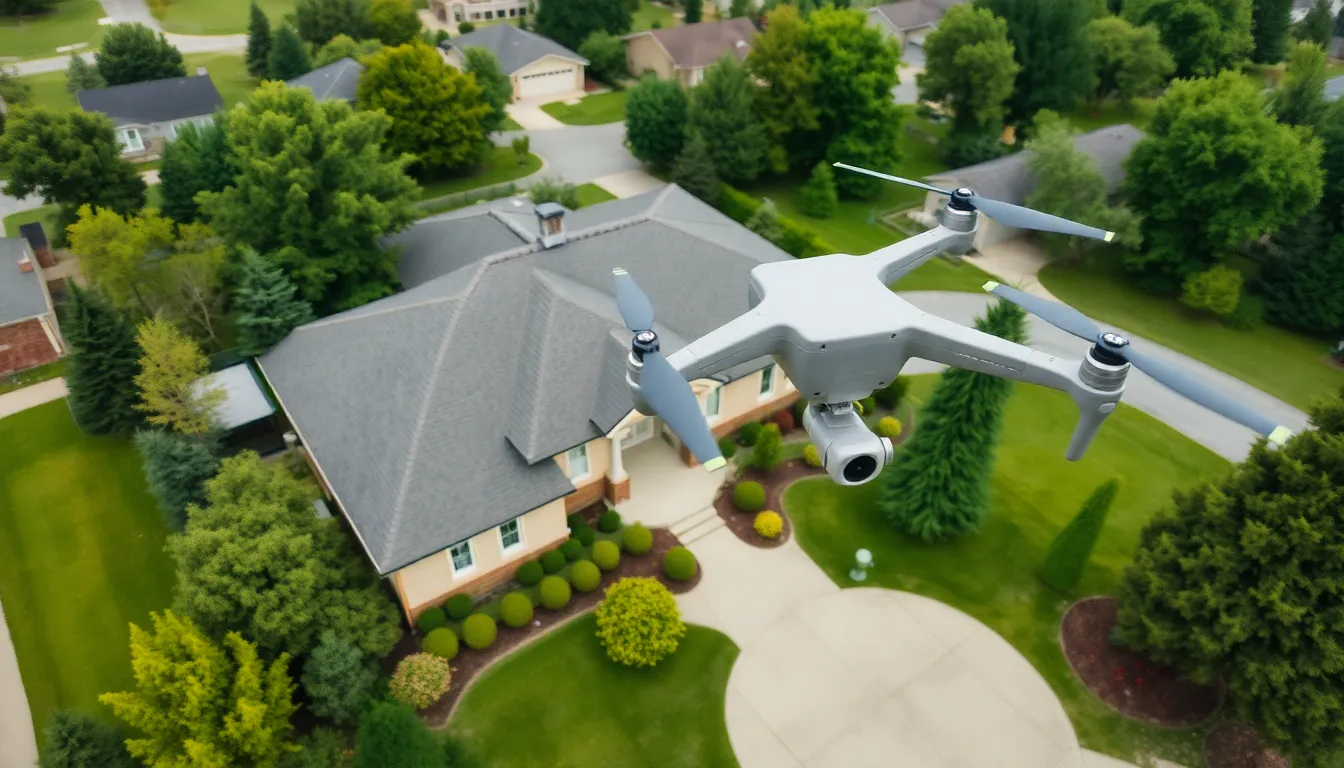
Drones revolutionize real estate photography, offering numerous benefits that enhance visual presentations of properties. They provide innovative solutions to conventional marketing strategies.
Enhanced Aerial Perspectives
Aerial perspectives from drones capture unique angles of properties. Properties appear more expansive when filmed from above. Drone imagery showcases surrounding landscapes, giving buyers a comprehensive view. Different altitudes highlight remarkable features such as pools, gardens, and rooftops. This distinct perspective ensures that listings stand out in a crowded market. Buyers are drawn to visually compelling images that depict not just the property but its surroundings.
Increased Marketability
Incorporating drone photography increases a property’s marketability significantly. Listings featuring aerial shots attract more potential buyers. Studies indicate that properties with drone images sell up to 68% faster compared to traditional images. Buyers appreciate the visual storytelling that drones offer, providing insights into a property’s layout and nearby amenities. This engaging content often generates higher online engagement, leading to more inquiries and visits. By enhancing the visual appeal of listings, agents improve their overall sales potential.
Types of Drones Suitable for Real Estate Photography
Certain drones excel in real estate photography, helping agents showcase properties effectively. Drones fall into two primary categories: consumer drones and professional drones.
Consumer Drones
Consumer drones often serve entry-level photographers. They feature user-friendly interfaces, making them accessible to those new to aerial photography. Many models deliver decent image quality, with some capturing 4K video resolution. Examples include the DJI Mini series and the Phantom series. These drones typically come with built-in GPS and basic stabilization systems, assisting users in maintaining steady shots. Price points for consumer drones generally range from $300 to $1,000, offering affordability for agents and homeowners alike.
Professional Drones
Professional drones cater to advanced users, elevating real estate photography with superior capabilities. These drones provide advanced stabilization technology and high-resolution sensors, meeting the demands of experienced photographers. Popular choices include the DJI Matrice series and the Skydio series. Many models boast longer flight times and larger payload capacities, allowing for the use of professional-grade cameras. Prices for professional drones start around $1,500 and can exceed $5,000, reflecting their enhanced features and capabilities.
Key Features to Look for in Drones
Selecting the right drone involves understanding key features integral to enhancing real estate photography. Knowledge of these aspects ensures that users can maximize the potential of aerial imaging.
Camera Quality
Camera quality holds significant importance for real estate drones. High-resolution cameras, ideally 12 MP or more, capture detailed images that attract buyers. A 4K video capability enhances visual storytelling, making properties vivid. Look for cameras with decent low-light performance, ensuring quality photos at dusk or dawn. Consider gimbal stabilization, as it helps eliminate shaky footage, producing professional-grade results.
Flight Time and Range
Flight time and range influence the drone’s usability during shoots. A minimum flight time of 20-30 minutes allows ample opportunity for covering large properties. Users often prefer drones with a range of at least 3-5 kilometers, enabling them to explore various angles without frequent battery changes. Longer ranges grant flexibility when photographing expansive landscapes or properties in remote areas.
Stability and Control
Stability and control are crucial for capturing sharp images and smooth videos. Drones equipped with GPS and advanced stabilization features maintain steady flight, even in windy conditions. User-friendly control systems enhance handling, allowing for precise maneuvering around obstacles. Intuitive software for real-time monitoring ensures that users can adjust camera settings on-the-fly, optimizing shots as needed.
Tips for Effective Real Estate Photography with Drones
Drones can significantly enhance real estate photography. Effective planning and compliance with local regulations ensure quality results.
Planning Your Shots
Planning ensures capturing the best angles and features. Start by scouting the property to identify unique perspectives. Using a shot list can streamline the process and eliminate missed opportunities. Consider the time of day for optimal lighting; golden hour is ideal for vibrant images. Additionally, focus on showcasing the property’s surroundings, highlighting nearby parks or amenities that appeal to buyers. A comprehensive plan can optimize flight time, maximizing visual storytelling while minimizing distractions in the frame.
Understanding Local Regulations
Understanding local regulations is critical for safe drone operation. Each area has specific FAA guidelines that must be followed, ensuring compliance and safety. Registration of the drone may be necessary, particularly for commercial use. Pilots must maintain a visual line of sight with their drones during flights. Restrictions may also include no-fly zones around airports or crowded events. Consulting with local authorities will clarify any unique regulations that apply to the property’s location, avoiding potential legal issues while focusing on capturing stunning real estate images.
Drones are transforming real estate photography by providing unparalleled visual appeal and engagement. With their ability to capture unique perspectives and high-definition imagery, they help properties stand out in a competitive market. The efficiency and effectiveness of drone technology not only enhance marketing strategies but also facilitate quicker sales.
By investing in the right drone equipment and adhering to regulations, agents can maximize their listings’ potential. As this technology continues to evolve, embracing drones will likely become essential for anyone looking to succeed in the real estate industry.


