
Understanding basic network topology is essential for anyone looking to grasp the fundamentals of computer networking. It serves as the blueprint for how devices connect and communicate within a network. From homes to large enterprises, the layout of a network can significantly impact performance, scalability, and troubleshooting efficiency.
Different types of network topologies, such as star, bus, and ring, each come with their own advantages and disadvantages. By exploring these structures, individuals can make informed decisions about which topology best suits their needs. Whether setting up a small home network or managing a complex corporate system, knowing the basics of network topology can streamline the process and enhance overall connectivity.
Understanding Basic Network Topology
Network topology defines the arrangement of devices within a network. It impacts how data flows and how efficiently the network operates.
What Is Network Topology?
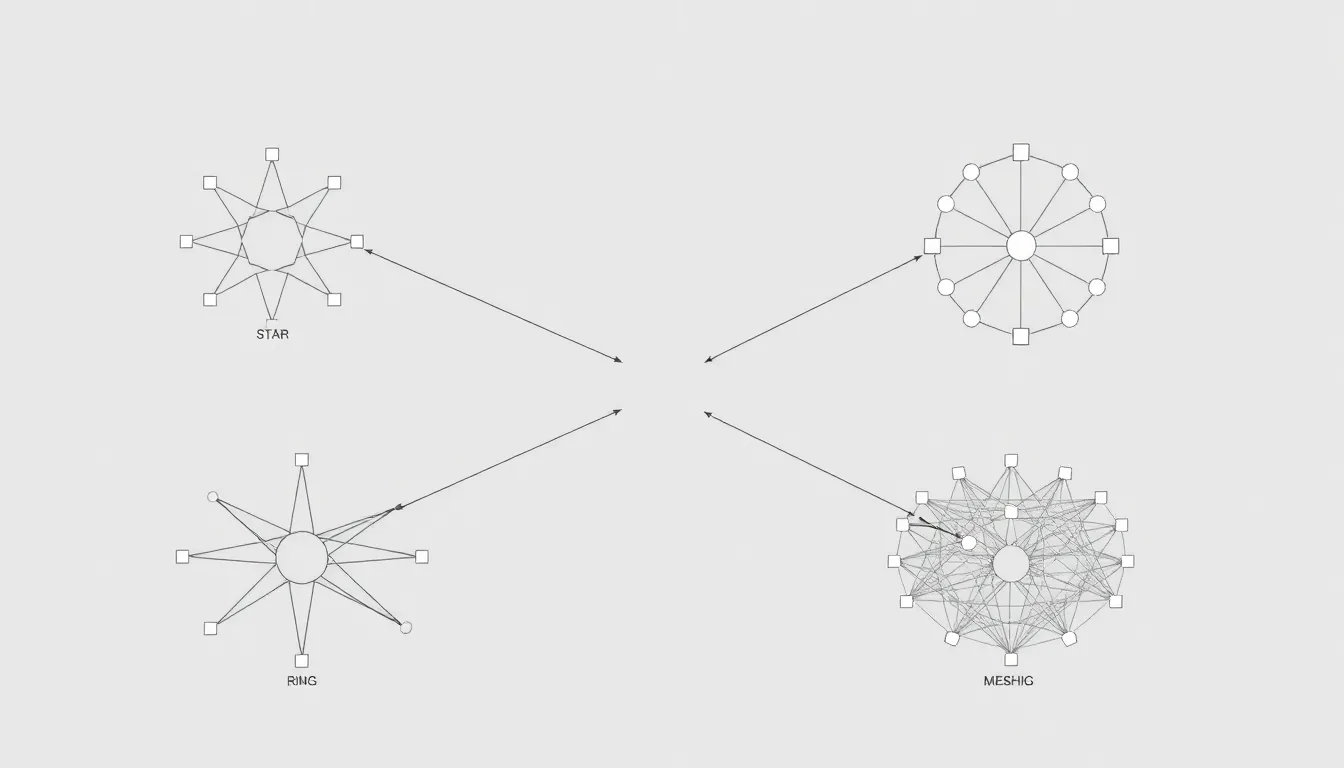
Network topology refers to the layout that interconnects various network devices. Common types include:
- Star Topology: Centralizes all devices around a central hub or switch.
- Bus Topology: Connects devices along a single communication line.
- Ring Topology: Links each device in a circular pathway, allowing data to flow in one direction.
- Mesh Topology: Every device connects directly to every other device, enhancing redundancy.
Understanding these layouts helps identify their unique characteristics and suitability for specific network requirements.
Importance of Network Topology
Network topology plays a critical role in network design and performance. Key benefits include:
- Performance: The layout directly influences data transfer efficiency and speed.
- Scalability: Certain topologies allow easier expansion without significant disruption, accommodating future growth.
- Troubleshooting: Understanding the structure simplifies the identification and resolution of issues.
- Cost-Effectiveness: Different topologies provide varying levels of cost-related efficiency, helping organizations optimize resource allocation.
Recognizing the significance of network topology assists in selecting the most appropriate configuration for various applications, ensuring reliable and efficient connectivity.
Types of Basic Network Topologies
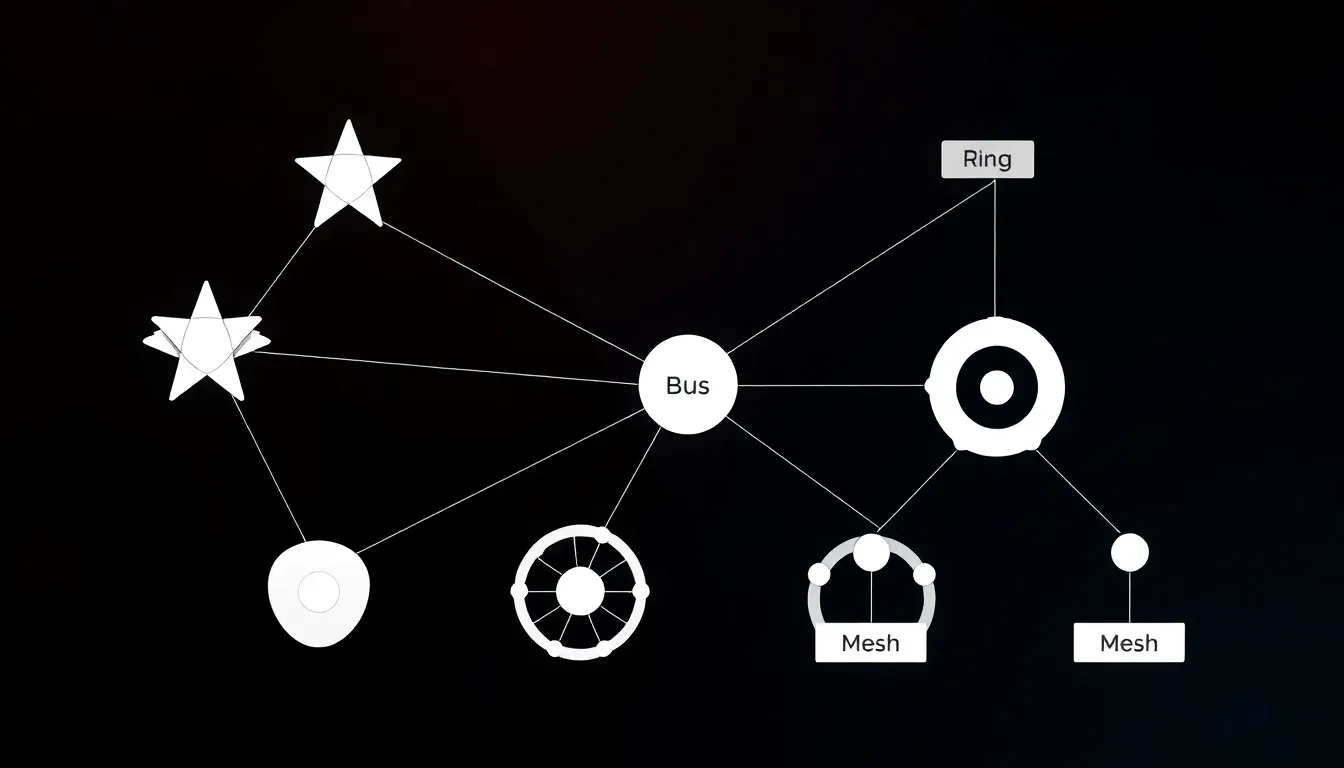
Understanding the different types of basic network topologies helps in selecting the ideal setup for specific networking needs. Below are the primary topologies, showcasing their structures, advantages, and disadvantages.
Star Topology
Star topology connects all devices to a central hub. This setup enhances performance since each device links independently to the hub, enabling effective data transmission.
- Advantages: Easy to add or remove devices, centralized management allows for quick troubleshooting, and a failure in one cable does not affect others.
- Disadvantages: Central hub becomes a single point of failure; if it fails, the entire network goes down.
Bus Topology
Bus topology utilizes a single backbone cable to connect all devices. Each device attaches to this main cable, making it straightforward and cost-effective.
- Advantages: Low installation cost due to minimal cabling and straightforward layout; easy to implement for small networks.
- Disadvantages: Performance degrades as more devices connect; a failure in the backbone affects the entirety of the network.
Ring Topology
Ring topology connects devices in a circular fashion, with each device linking to two others. Data travels in one direction around the ring.
- Advantages: Predictable performance and consistent data traffic since messages circulate in one direction; easy to identify faults.
- Disadvantages: Failure of any single device disrupts the entire network; using a solution like a dual ring can mitigate this risk, but complexity increases.
Mesh Topology
Mesh topology links each device to multiple others, creating a robust connection. This structure can be partial or full, depending on how many devices are interconnected.
- Advantages: High reliability and redundancy; if one link fails, others maintain connectivity, making it ideal for critical applications.
- Disadvantages: Increased installation and maintenance costs due to extensive cabling and complexity of setup; often inefficient for smaller networks.
Advantages and Disadvantages of Each Topology
Understanding the advantages and disadvantages of each topology aids in making informed network design choices. Below are key points related to star, bus, ring, and mesh topologies.
Star Topology Pros and Cons
Pros:
- Centralized management simplifies troubleshooting.
- Scalability allows easy addition of devices without network disruption.
- Isolation of devices enhances fault tolerance; one device failure doesn’t affect others.
Cons:
- Hub failure leads to complete network failure.
- Higher installation costs due to extensive cabling and the hub’s expense.
- Performance may degrade with increased network traffic.
Bus Topology Pros and Cons
Pros:
- Low installation costs due to minimal cabling requirements.
- Simple layout makes setup straightforward in smaller networks.
- Easy to implement and manage for basic networking needs.
Cons:
- Performance degrades significantly as more devices connect.
- Difficulties in troubleshooting can arise from the shared communication medium.
- Single cable failure leads to network disruption.
Ring Topology Pros and Cons
Pros:
- Predictable performance due to unidirectional data flow.
- Easy to identify network issues through device monitoring.
- No collisions occur since each device has its turn in transmission.
Cons:
- Device failure can disrupt the entire network, impacting reliability.
- Adding or removing devices can cause temporary network downtime.
- Troubleshooting can be complex, especially in large configurations.
Mesh Topology Pros and Cons
Pros:
- High reliability due to multiple pathways between devices; failure in one link doesn’t impact connectivity.
- Enhanced security as data travels through various routes.
- Supports high bandwidth and optimal data transmission rates.
- High installation and maintenance costs due to extensive cabling.
- Complexity increases with the number of devices, complicating management.
- Requires sophisticated routing protocols for efficient data packet delivery.
Choosing the Right Topology for Your Network
Selecting an appropriate network topology is crucial for optimizing performance, scalability, and troubleshooting. Various factors and use cases influence this decision-making process.
Factors to Consider
- Network Size: Assess the number of devices in the network. Larger networks may benefit from a star or mesh topology due to their ability to manage high traffic effectively.
- Installation Costs: Evaluate the budget for setup. Bus topology typically incurs lower costs, while mesh topology demands higher investments due to its complexity.
- Reliability Needs: Consider the required network reliability. Mesh topology provides excellent redundancy, making it ideal for critical applications.
- Scalability: Determine future growth potential. Star topology allows easier scalability, as adding devices doesn’t significantly disrupt the existing setup.
- Performance Requirements: Analyze the performance demands of applications. Ring topology offers predictable performance, but it may not handle high traffic as effectively as other structures.
- Troubleshooting Ease: Review the network’s complexity for maintenance. Star topology simplifies troubleshooting by isolating issues at the hub, while bus topology can complicate problem detection.
Common Use Cases
- Home Networks: Star topology suits residential environments, enabling easy connectivity for various devices like computers and smart appliances.
- Small Offices: Bus topology works well for small offices with limited devices, providing a cost-effective solution for straightforward setups.
- Enterprise Networks: Mesh topology excells in large enterprises that require high availability and fault tolerance, ensuring critical operations remain uninterrupted.
- Educational Institutions: Ring topology may benefit schools or universities with structured setups, allowing predictable performance and easy expansion.
- Research Facilities: Star topology is ideal for research settings where devices require consistent connections, supporting high-performance tasks.
Understanding basic network topology is essential for anyone looking to optimize their network design. Each topology offers unique advantages and challenges that can significantly impact performance and reliability. By carefully considering factors like network size and specific needs, individuals can select the most suitable configuration.
This knowledge not only enhances connectivity but also improves overall efficiency. Whether for a home setup or a complex corporate environment, the right topology ensures a robust and scalable network. Embracing these principles empowers users to make informed decisions, leading to better network performance and user satisfaction.


