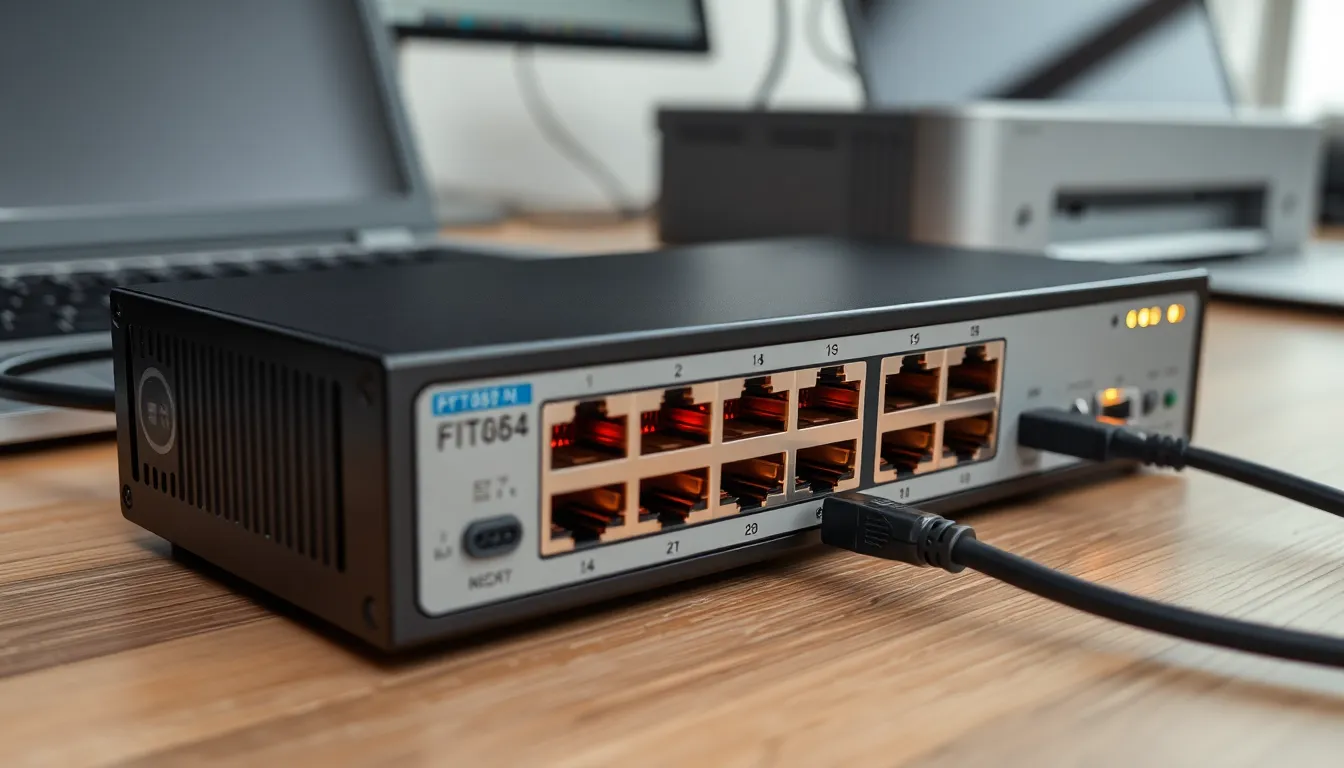
In a world where connectivity reigns supreme, the unsung hero of your network is the Ethernet switch. This little box might not look like much, but it’s the backbone of efficient data transfer, keeping everything running smoothly. Imagine a traffic cop directing data like a pro, ensuring packets reach their destination without a hitch.
Whether you’re streaming cat videos or conducting a high-stakes video conference, an Ethernet switch is your trusty sidekick. It’s like having a personal assistant for your devices, making sure they all play nice together. So, if you’re tired of buffering and dropped connections, it’s time to give this networking marvel a closer look. After all, who wouldn’t want a reliable partner in the chaotic world of digital communication?
What Is An Ethernet Switch?
An Ethernet switch operates as a critical device in local area networks (LANs). It connects multiple devices, including computers, printers, and servers, enabling them to communicate with each other. By functioning intelligently, an Ethernet switch filters and forwards data packets in a network, directing them to their intended destinations.
Data transfer efficiency significantly improves when using an Ethernet switch since it can simultaneously manage communications for numerous devices. Each connected device receives a unique MAC address, allowing the switch to identify and route data specifically. For example, when one computer sends a file to another, the switch ensures the data reaches only the intended recipient instead of broadcasting it to all devices on the network.
Switches differ from hubs, which send data to all devices connected, leading to potential data collisions. In contrast, switches create separate collision domains for each connected device, enhancing overall network performance. As a result, other devices remain unaffected during data transfers, improving network reliability.
Additionally, modern Ethernet switches support various features, such as VLANs (Virtual Local Area Networks) and Quality of Service (QoS). VLANs isolate network segments for security, while QoS prioritizes critical data, essential for activities like video conferencing or online gaming.
Devices equipped with Ethernet switches find it easier to handle bandwidth requirements, especially as online activities increase. Scalability also becomes a key attribute, allowing users to add more devices without compromising performance. Thus, they become integral components in both home and enterprise networks, fostering better connectivity and communication.
Types Of Ethernet Switches
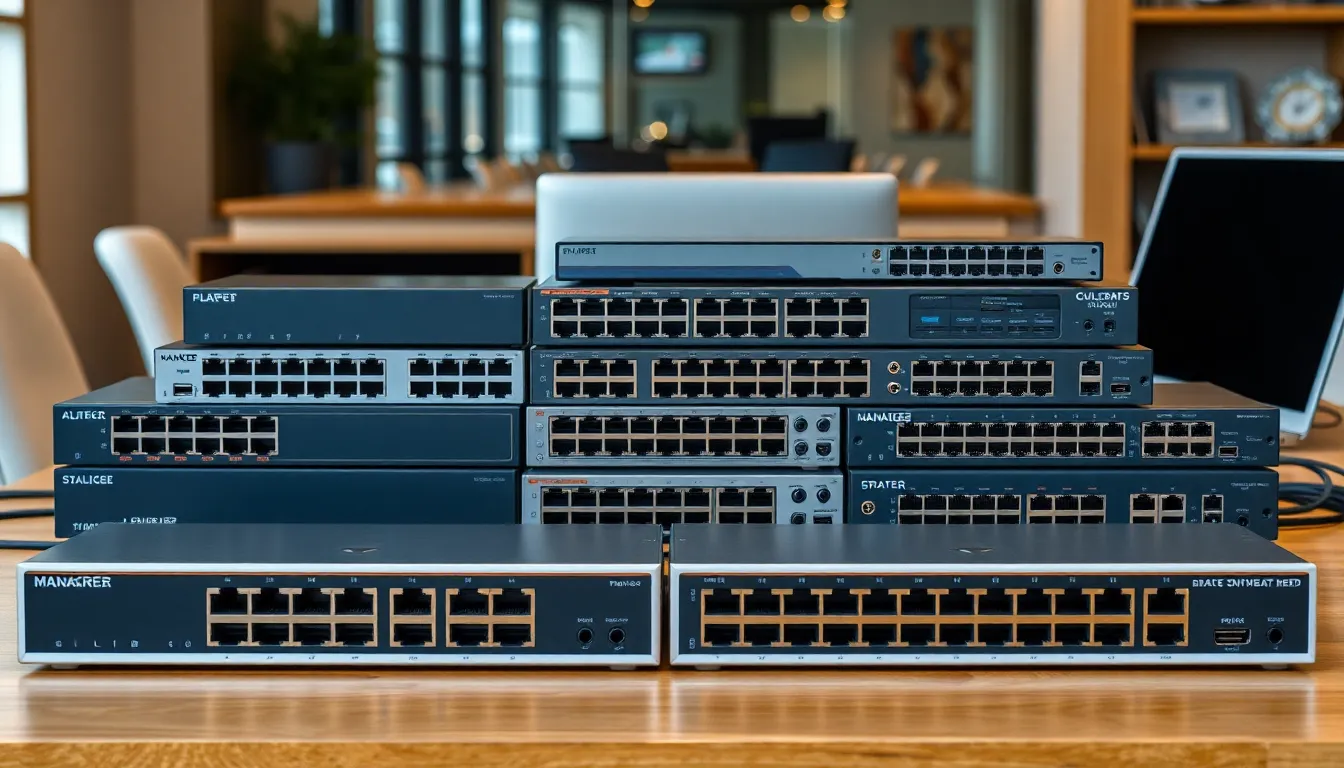
Ethernet switches come in several types, each designed to meet specific networking needs. Understanding these types can help determine the best fit for various environments.
Managed Ethernet Switches
Managed Ethernet switches offer advanced features for network control. Administrators can configure settings, monitor traffic, and troubleshoot issues through a user-friendly interface. These switches enable the setup of Virtual Local Area Networks (VLANs) to enhance security and optimize performance. For organizations handling sensitive data, these capabilities are invaluable. Additionally, they support Quality of Service (QoS), allowing prioritization of essential data streams, which is critical during high-demand periods.
Unmanaged Ethernet Switches
Unmanaged Ethernet switches are straightforward plug-and-play devices. They require no configuration, making them ideal for home users or small offices looking for quick connectivity. With these switches, devices connect seamlessly, allowing basic communication without complex setup procedures. While they lack advanced features, unmanaged switches handle everyday networking tasks effectively. They also provide a cost-effective solution for users who need minimal functionality and don’t require management capabilities.
Smart Ethernet Switches
Smart Ethernet switches act as a middle ground between managed and unmanaged switches. These devices offer essential features for monitoring and configuration, but with less complexity than fully managed alternatives. Users can adjust settings for VLANs and employ basic QoS features. Such switches work well in small to medium-sized networks, providing flexibility without overwhelming users with technical options. They cater to environments needing a balance of performance and ease of use, appealing to those who want more control than unmanaged switches provide.
Key Features To Consider
Determining the right Ethernet switch involves several critical features that enhance network performance and usability.
Port Count
Port count refers to the number of devices a switch can connect. A switch with 8 to 48 ports accommodates various needs. Small offices often find 8 to 16 ports sufficient, while larger enterprises require 24 or more. Each additional port expands connectivity. Users should evaluate their current and future device requirements before making a choice.
Speed and Performance
Speed and performance highlight a switch’s ability to handle data efficiently. Common speeds include 1 Gbps, 10 Gbps, and higher, depending on the switch model. Faster speeds are essential for bandwidth-intensive applications like video conferencing and online gaming. A switch must handle multiple concurrent connections without latency to maintain seamless networking. Performance also varies based on factors such as forwarding rates and buffer memory.
Layer 2 vs Layer 3 Functionality
Layer 2 and Layer 3 functionalities distinguish the capabilities of switches. Layer 2 switches operate at the data link layer, primarily handling MAC addresses and basic routing within a local area network. Layer 3 switches, however, function at the network layer and support IP routing. They enable inter-VLAN routing and offer more advanced traffic management features. Choosing between these layers depends on network complexity and specific deployment requirements.
Benefits Of Using An Ethernet Switch
Ethernet switches enhance network performance and facilitate efficient data management. High-speed connections provide smoother data transmission, making activities like streaming or online gaming more enjoyable. Each switch directs traffic intelligently, which minimizes network congestion and reduces latency.
Improved security features often come with modern Ethernet switches. VLAN support allows for the segmentation of networks, isolating sensitive data and reducing the risk of unauthorized access. Administrators can better control who has access to different parts of the network.
Scalability stands out as another key benefit. Businesses can easily add devices without sacrificing performance. Structured connections improve overall bandwidth efficiency, accommodating growing demands in both home and enterprise environments.
Advanced management capabilities help maintain network integrity. Managed switches enable traffic monitoring and configuration adjustments to optimize network performance. Such features provide a proactive approach to handling network issues.
Flexibility also defines Ethernet switches. Compatibility with various devices allows seamless integration into existing infrastructures. This adaptability ensures that users can tailor their network according to specific needs.
Cost efficiency cannot be overlooked. Ethernet switches reduce the need for additional networking devices, promoting a more streamlined setup. Investing in the right switch can lead to long-term savings and greater overall network reliability.
Ethernet switches play a vital role in enhancing network efficiency and performance. By intelligently managing data traffic and connecting multiple devices, they ensure seamless communication across various applications. Whether for home use or enterprise environments, the right Ethernet switch can significantly improve connectivity and user experiences.
With options like managed, unmanaged, and smart switches available, users can select a device that aligns with their specific needs. Key features such as port count and speed are essential considerations when making a choice. Investing in a reliable Ethernet switch not only boosts performance but also provides scalability and security, making it a smart addition to any network setup.