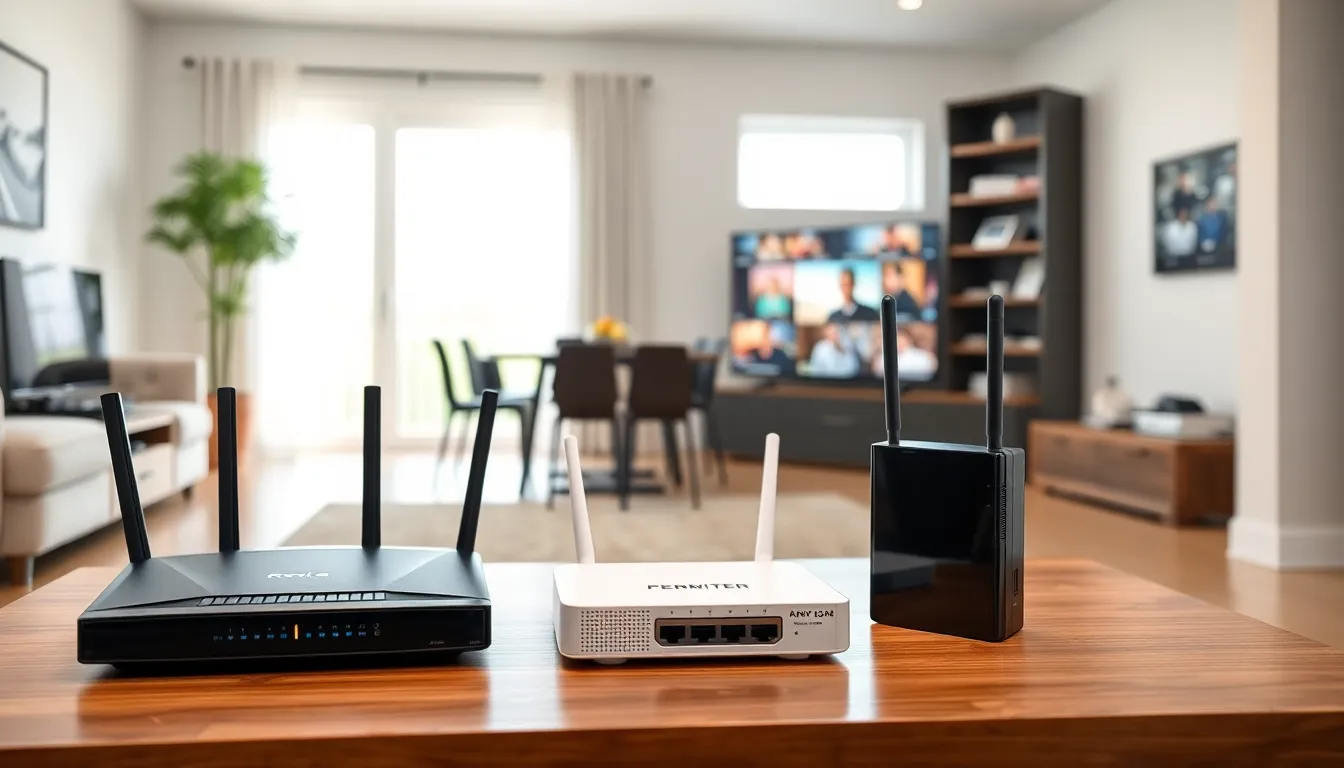
In today’s tech-savvy world, home network devices are the unsung heroes of modern living. They quietly work behind the scenes, keeping everyone connected while ensuring that binge-watching sessions and online gaming marathons run smoothly. Without these gadgets, navigating the digital realm would feel like trying to find Wi-Fi in a black hole—frustrating and utterly hopeless.
From routers that double as stylish decor to smart speakers that listen better than your best friend, these devices aren’t just practical; they’re essential for a connected home. With the right setup, he can transform his living space into a tech paradise, where buffering is a thing of the past and every corner of the house enjoys a strong signal. Dive into the world of home network devices and discover how to elevate connectivity while adding a dash of fun to everyday life.
Overview of Home Network Devices
Home network devices play a crucial role in creating a reliable and efficient internet environment. Routers serve as the backbone of any home network, directing data traffic between devices and the internet. They allow various devices to connect wirelessly, enhancing accessibility.
Access points extend wireless coverage, ensuring dead zones become a thing of the past. They strengthen signals in larger homes or through thick walls. Additionally, network switches support multiple wired connections, helping in environments that require stable, fast interactions, such as gaming or streaming.
Modems connect homes to internet service providers, converting signals for devices to use. In many cases, routers and modems come as a combined unit, simplifying setups. Firewalls, whether hardware or software, protect devices from external threats, contributing to a secure network environment.
Wireless range extenders boost Wi-Fi signals, providing coverage in hard-to-reach areas. Smart home hubs centralize control for IoT devices, enabling seamless communication between smart home technology. These innovations increase both convenience and control over home environments.
Choose devices compatible with internet speeds to prevent bottlenecks. Prioritizing performance aspects, such as latency and throughput, enhances the overall user experience. Regularly updating device firmware keeps the network secure and optimally functioning, addressing vulnerabilities.
Understanding and utilizing these devices can greatly improve overall connectivity. Exploring different configurations may lead to more efficient home networking solutions for individual needs. Adaptability remains key, as technology evolves and personal preferences change.
Types of Home Network Devices
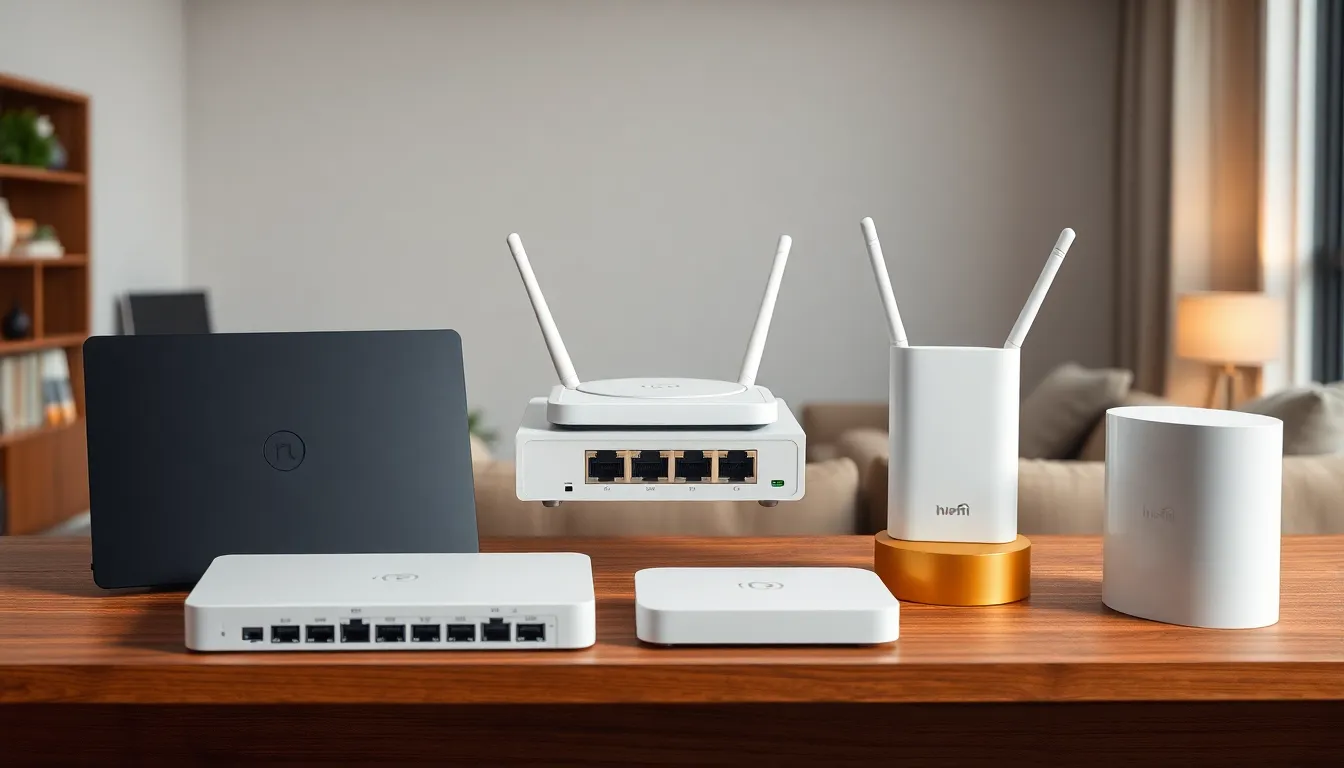
Home network devices include essential components that connect devices and enhance overall functionality in a household. Each type serves a specific purpose in ensuring reliable internet access.
Routers
Routers direct data traffic between devices and the internet. They allow multiple devices to use the same internet connection simultaneously without slowing down. Some models offer advanced features, such as Quality of Service (QoS), which prioritizes bandwidth for certain applications like gaming or streaming. It’s crucial to select a router compatible with current internet speeds to maximize performance and reduce bottlenecks.
Switches
Switches facilitate communication between wired devices within a network. They expand the number of available Ethernet ports, connecting devices like desktops, printers, and storage devices for seamless data transfer. Managed switches offer enhanced control over data traffic and network performance. Choosing a switch with appropriate port counts ensures scalability as your networking needs grow.
Access Points
Access points extend wireless coverage throughout a home. They connect to a router and distribute Wi-Fi signals in areas where coverage might be weak. Utilizing access points can dramatically improve signal quality in larger homes or spaces with several obstructions. When selecting an access point, consider the number of devices that will connect simultaneously and the required range for optimal performance.
Extenders
Extenders boost Wi-Fi signals in hard-to-reach areas. They work by receiving the existing Wi-Fi signal, amplifying it, and re-transmitting it for better coverage. Deciding on a good extender involves checking compatibility with your router and ensuring the device supports the same speed standards. Proper placement is essential for maximizing an extender’s effectiveness, ideally halfway between the router and the area with weak coverage.
Key Features to Consider
Understanding key features in home network devices is essential for optimizing connectivity. Factors like speed, range, and security significantly impact the overall experience.
Speed and Bandwidth
Speed and bandwidth dictate how fast data transfers across devices. Routers equipped with the latest Wi-Fi standards, such as Wi-Fi 6, provide faster connections. Bandwidth affects the number of simultaneous activities without lag—streaming, gaming, and video conferencing require higher bandwidth. Quality of Service (QoS) settings help prioritize bandwidth for critical applications, ensuring smooth operation. Device compatibility with internet service provider speeds plays a crucial role, as misalignment can lead to bottlenecks.
Range and Coverage
Range and coverage ensure every corner of a home accesses a strong Wi-Fi signal. Access points and extenders help eliminate dead zones by boosting wireless coverage. Proper placement of these devices enhances signal strength in larger spaces. Homes with multiple floors may benefit from a combination of routers and access points for optimal performance. A network’s layout and environment affect overall coverage; thick walls or large furniture can obstruct signals. Evaluating physical space requirements helps find solutions tailored to individual home setups.
Security Features
Security features protect networks from potential threats. Firewalls, built into routers, block unauthorized access while filtering harmful traffic. Regular firmware updates are vital for maintaining security against emerging vulnerabilities. Additionally, Wi-Fi Protected Access (WPA3) encryption offers enhanced security for wireless connections. Enabling a guest network allows visitors internet access without compromising the main network. Implementing these security measures ensures a safe and secure home networking environment.
Popular Brands and Models
Home network devices come in various models from popular brands, each offering unique features and capabilities.
TP-Link
TP-Link presents a reliable range of routers and extenders designed for optimal connectivity. Known for affordability, its Archer series features routers that support Wi-Fi 6 technology, ensuring faster speeds and better performance. The range extenders from TP-Link successfully eliminate dead zones in homes, enhancing overall Wi-Fi coverage. Users appreciate the easy setup process, often facilitated by the Tether app. Security protocols like WPA3 offer robust protection against threats, making TP-Link a popular choice for home networking.
Netgear
Netgear offers high-performance devices, including routers and mesh systems that cater to different user needs. The Nighthawk series stands out for its advanced routing capabilities and high-speed performance, ideal for gamers and streamers. Mesh Wi-Fi systems provide seamless coverage throughout larger homes by connecting multiple nodes. Parents benefit from the Circle app, which gives control over internet usage for connected devices. Overall, Netgear devices deliver a balance of power, speed, and security.
Asus
Asus is renowned for its innovative home networking solutions, particularly in the gaming sector. Their RT-AX series routers support the latest Wi-Fi 6 standards, catering to bandwidth-heavy activities like online gaming. AiMesh technology allows users to create a customized mesh network, providing seamless coverage. Many models include advanced security features like AiProtection, safeguarding against cyber threats. Asus’s commitment to performance and user experience makes it a preferred brand among tech enthusiasts.
Home network devices play a crucial role in enhancing connectivity and overall digital experiences. By understanding the specific functions of routers, switches, access points, and other devices, individuals can create a tailored network that meets their unique needs.
Choosing the right devices and keeping them updated ensures optimal performance and security. As technology continues to evolve, staying informed about the latest advancements and features will empower users to maintain a robust and efficient home network.
Investing time in optimizing these devices can lead to a seamless online experience, whether for work, gaming, or streaming. Ultimately, a well-configured home network is essential for navigating today’s connected world.