In a world where privacy feels like a thing of the past, spy drones are taking stealth to new heights—literally! These flying gadgets have gone from military must-haves to everyday tech marvels, leaving many to wonder: is that buzzing sound above their heads a friendly neighborhood drone or something more sinister?
Overview of Spy Drones
Spy drones serve various purposes, most commonly in military and surveillance contexts. Equipped with advanced technologies, these unmanned aerial vehicles can capture high-resolution images and videos. Many models feature thermal imaging and night vision capabilities, enhancing their operational effectiveness in diverse conditions.
A range of industries utilizes spy drones. Emergency services rely on them for search and rescue operations. Environmental agencies employ drones to monitor wildlife and track changes in landscapes. These devices significantly reduce the risks to human life during missions.
Spy drones vary in size and functionality. Compact versions can fit in a backpack, making deployment swift and discreet. Larger drones often carry specialized equipment while maintaining longer flight times. This flexibility allows users to select drones that best suit their specific needs.
Privacy concerns escalate as the presence of spy drones grows. Citizens often express anxiety about surveillance and data collection practices. Legal frameworks remain underdeveloped, often struggling to keep pace with technological advancements. Authorities need to establish regulations to ensure responsible use and protect individual rights.
Technological advancements continually drive innovations in spy drones. Developers focus on enhancing battery life, improving image quality, and increasing automation. Future designs may integrate artificial intelligence to analyze data in real-time and provide actionable insights.
Deployments of spy drones have sparked debates on ethical implications. While supporters argue for their benefits in security and efficiency, critics highlight privacy risks and potential misuse. Societal dialogues about the balance between security and personal privacy will shape the future of spy drone technology.
Types of Spy Drones
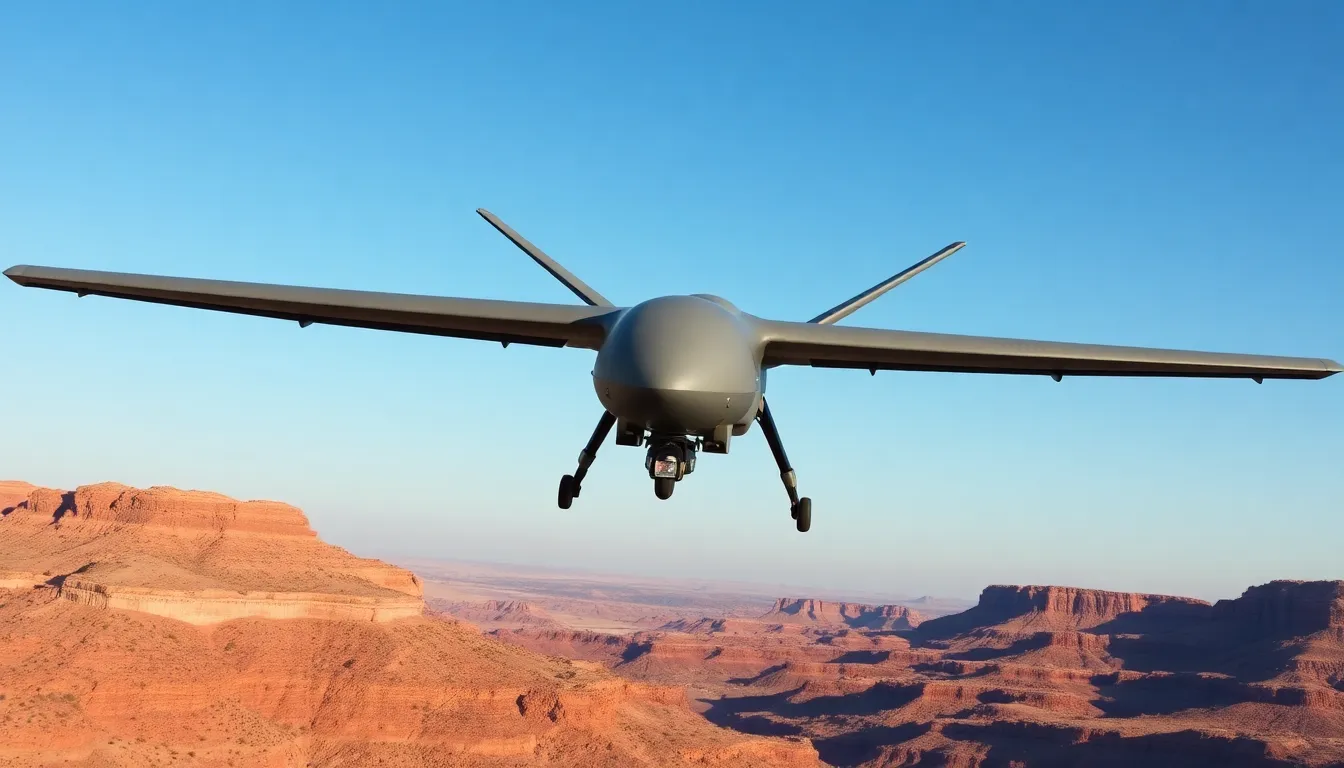
Spy drones vary significantly in design and purpose, primarily falling into military and civilian categories.
Military Spy Drones
Military spy drones focus on reconnaissance and intelligence gathering. These drones often feature enhanced capabilities, such as high-resolution cameras, infrared sensors, and advanced data collection systems. The MQ-9 Reaper exemplifies a widely used military drone, known for its ability to conduct prolonged missions and deliver real-time surveillance. Military forces deploy these drones for border patrolling, battle zone assessments, and monitoring enemy activities. Enhanced stealth features allow military drones to operate undetected, making them vital in tactical operations.
Civilian Spy Drones
Civilian spy drones find applications in various sectors, including emergency services and environmental monitoring. Many organizations utilize drones like the DJI Mavic for aerial photography and situational awareness during disasters. These drones often include GPS technology, live streaming capabilities, and thermal imaging, enhancing their functionality. Law enforcement agencies also leverage civilian drones for traffic monitoring and search and rescue missions. As regulations develop, the use of these drones raises ethical questions regarding privacy and data collection, highlighting the need for clear guidelines governing civilian operations.
How Spy Drones Work
Spy drones utilize advanced technology to gather intelligence and perform various surveillance tasks. These unmanned aerial vehicles (UAVs) operate across military and civilian sectors, focusing on efficiency and effectiveness.
Technology Behind Spy Drones
Spy drones incorporate sophisticated technologies for optimal performance. High-resolution cameras provide clear imagery while infrared sensors enable night vision capabilities, enhancing their usability in diverse conditions. Compact models ensure quick and discreet deployment. In contrast, larger drones carry specialized equipment for more extensive missions. Many units now feature automated systems, which allow for improved navigational accuracy and reduced operator intervention. The integration of artificial intelligence further enhances their functionality, enabling real-time data analysis and decision-making.
Data Collection Capabilities
Data collection capabilities define the effectiveness of spy drones. These UAVs capture high-definition images and videos, allowing for comprehensive situational awareness. Thermal imaging provides insights into temperature variances, assisting in search and rescue operations or wildlife monitoring. Drones can also collect video footage for intelligence gathering or surveillance. Diverse industries utilize this data to streamline operations and increase safety. The versatility in data collection methods meets the varying needs of military operations and civilian applications, emphasizing the importance of clear guidelines for responsible use.
Applications of Spy Drones
Spy drones play crucial roles in various fields, particularly in military contexts and civilian applications. Their versatility enhances operational effectiveness and drives innovation.
Surveillance and Reconnaissance
Surveillance remains one of the primary uses for spy drones. Military operations utilize these unmanned aerial vehicles (UAVs) for gathering intelligence in hostile territories. Equipped with high-resolution cameras and infrared sensors, drones capture clear images day and night. Reconnaissance missions benefit from real-time data streaming, offering insights on enemy movements and terrain conditions. Civilian applications also leverage surveillance capabilities. Law enforcement agencies employ drones for monitoring large events, enhancing public safety. Wildlife researchers use drones to study animal behavior without intrusive ground presence. This dynamic functionality illustrates that spy drones are integral to modern surveillance efforts.
Disaster Management
In disaster management, spy drones provide invaluable support. During emergencies, these UAVs assess damage quickly and effectively, aiding first responders. High-definition imagery illustrates flood extent or wildfire spread, informing resource allocation. Search and rescue teams deploy drones to locate missing persons in challenging terrains, expediting recovery efforts. Furthermore, environmental agencies monitor natural disasters using drones, collecting critical data for evaluating ecological impacts. Partnerships between technology providers and disaster response agencies enhance drone capabilities. These collaborations foster innovation and ensure drone use remains effective and responsible.
Ethical Considerations
Concerns about privacy and surveillance arise as spy drones become more prevalent. Individuals often question the implications of constant monitoring in both military and civilian contexts. While these drones provide valuable capabilities, such as enhanced security and operational efficiency, they also pose risks to personal privacy. Instances of unauthorized data collection and potential misuse of footage can lead to significant ethical dilemmas.
Laws governing drone surveillance often lag behind technological advancements. Current regulations frequently lack clarity on privacy protections, creating challenges for individuals and organizations. Consequently, clearer operational guidelines are essential to balance security needs and the right to privacy.
Domestic drone use sparks debates about transparency and accountability. Citizens deserve assurance that their personal data is safe from exploitation. Implementing comprehensive frameworks can help establish responsible practices for data usage and storage.
Societal dialogues play a critical role in shaping the future of spy drone technology. Engaging communities in discussions about ethical implications builds trust in these innovations. Stakeholder involvement, including policymakers, technology developers, and the public, encourages the development of ethical standards.
Organizations deploying drone technologies must prioritize ethical considerations in their operations. Integrating privacy-by-design principles can promote responsible usage. Industry leaders can foster transparency by disclosing data handling practices and establishing clear protocols for surveillance activities.
Ultimately, addressing ethical considerations associated with spy drones requires collaboration among various groups. By working together, they can ensure that advancements in drone technology serve the public good while respecting individual rights. Each step taken toward ethical deployment reinforces the commitment to responsible innovation.
The evolution of spy drones presents both remarkable opportunities and significant challenges. As these technologies become more integrated into various sectors, the balance between enhanced capabilities and privacy concerns intensifies. Society must engage in ongoing discussions about the ethical implications of drone usage to ensure responsible deployment.
Establishing clear regulations and operational guidelines will be essential in addressing these issues. By fostering collaboration among stakeholders, it’s possible to create frameworks that protect individual rights while leveraging the benefits of drone technology. The future of spy drones hinges on this collective effort, aiming for advancements that prioritize public good without compromising personal privacy.