
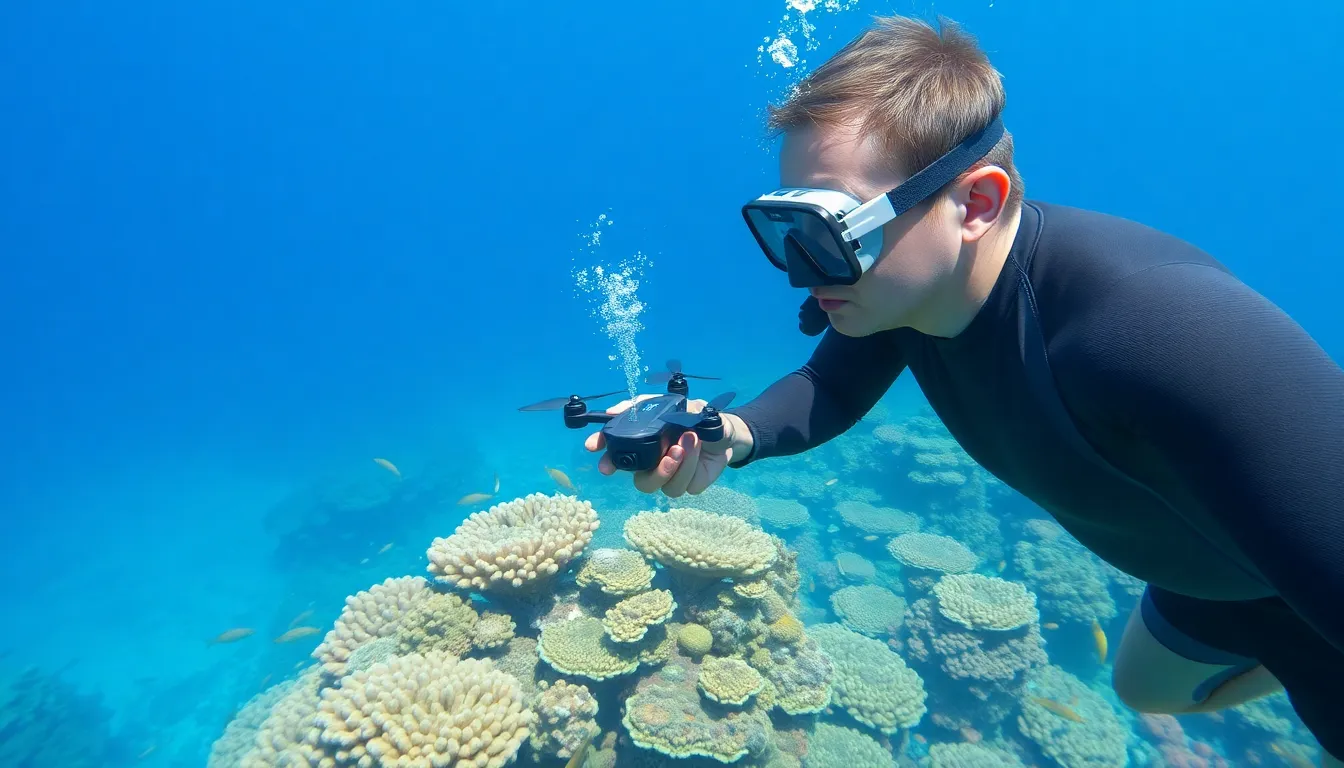
Underwater drones are revolutionizing how we explore and understand the mysteries of the ocean. These innovative devices, equipped with advanced technology, allow researchers, explorers, and even hobbyists to capture stunning visuals and gather critical data from beneath the waves. With the ability to dive deep into uncharted territories, they open up a world of possibilities for marine research and environmental monitoring.
As the demand for underwater exploration grows, so does the development of these high-tech tools. From inspecting underwater infrastructure to studying marine life, underwater drones are proving to be invaluable assets. They not only enhance our knowledge of aquatic ecosystems but also play a crucial role in conservation efforts. With their increasing accessibility and versatility, underwater drones are set to become essential companions in our quest to protect and understand the oceans.
Overview of Underwater Drones
Underwater drones, also known as remotely operated vehicles (ROVs) or autonomous underwater vehicles (AUVs), excel in exploring marine environments. Their designs cater to various uses, including scientific research, surveillance, and recreational activities. Underwater drones capture high-resolution images and videos, enabling users to observe marine life and geological formations from unique perspectives.
The technology behind underwater drones incorporates advanced sensors, cameras, and navigation systems. These components allow them to operate at significant depths, often exceeding 1,000 meters. Users can control many drones via online interfaces, while others autonomously navigate pre-programmed routes.
Underwater drones serve a plethora of industries. In marine research, scientists utilize them for environmental assessments and habitat studies. In the oil and gas sector, companies deploy drones to inspect subsea pipelines and infrastructure, ensuring safety and compliance. Recreational users employ these devices for capturing extraordinary underwater footage, enriching their marine exploration experiences.
With the increasing need for sustainable practices in ocean exploration, underwater drones play a pivotal role in conservation initiatives. They collect data on water quality and marine populations, assisting in monitoring ecosystem health. As technological advancements emerge, these drones become more accessible and affordable, expanding their user base and applications.
Types of Underwater Drones
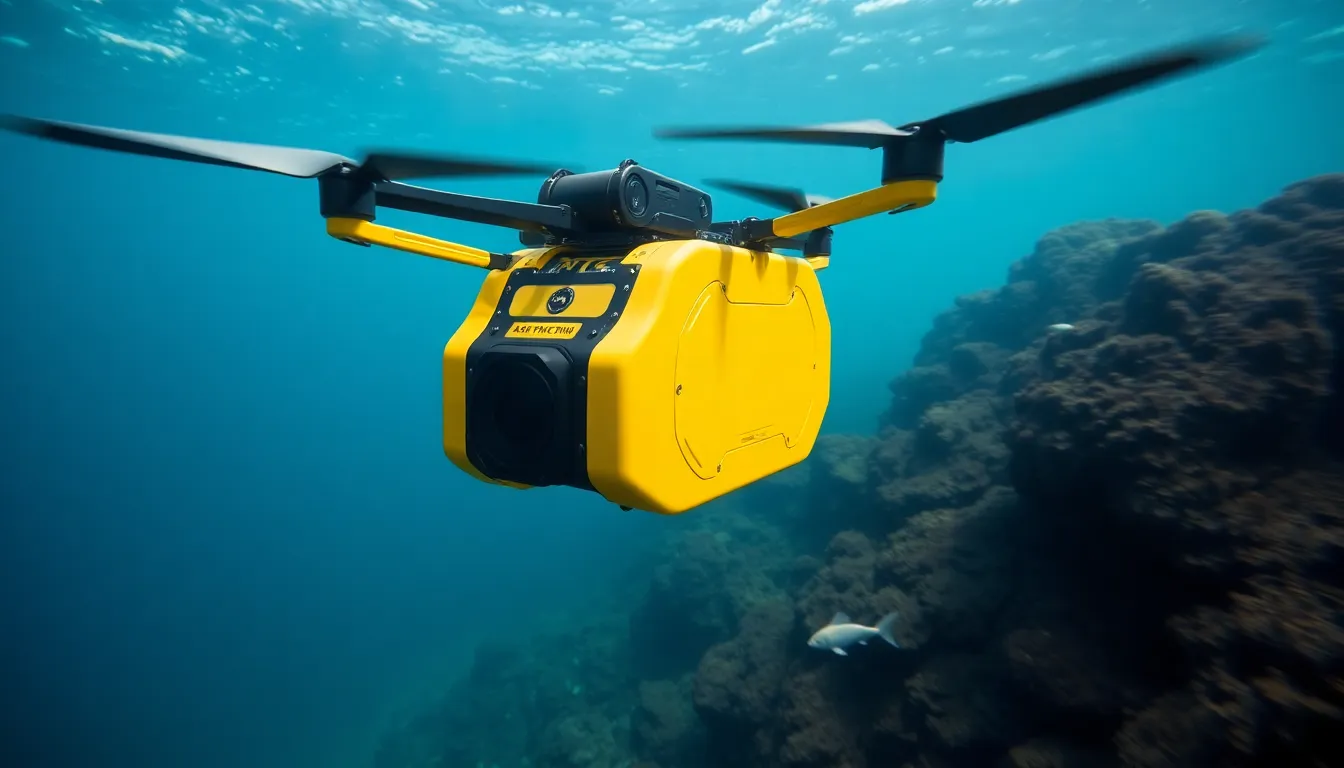
Underwater drones mainly fall into two categories: Remotely Operated Vehicles (ROVs) and Autonomous Underwater Vehicles (AUVs). Each type serves distinct purposes and operates using different technologies.
Remotely Operated Vehicles (ROVs)
ROVs are tethered drones controlled by operators on the surface. They feature high-definition cameras, lights, and robotic arms, enabling users to perform various tasks at significant depths. ROVs excel in environments requiring real-time control, such as pipeline inspections, underwater repairs, and research missions. Their design includes:
- Real-time Feedback: Operators receive live video feeds, allowing immediate adjustments to the drone’s operations.
- Depth Capability: Many ROVs function effectively beyond 3,000 meters, making them suitable for deep-sea explorations.
- Manipulation Tools: Equipped with tools, ROVs can conduct sampling and maintenance, offering efficiency in marine research.
Autonomous Underwater Vehicles (AUVs)
AUVs function independently from surface operators, using pre-programmed routes for navigation. They gather data autonomously, making them ideal for extensive survey missions and repetitive tasks. Key features of AUVs include:
- Advanced Navigation Systems: Incorporating GPS and sonar, AUVs navigate complex underwater terrains autonomously.
- Extended Range: Many AUVs can operate over distances of 10 to 100 kilometers, depending on battery life and mission requirements.
- Data Collection: Equipped with sensors, AUVs collect environmental data, such as temperature, salinity, and depth, providing valuable insights for marine scientists.
Both ROVs and AUVs contribute significantly to various industries, enhancing research capabilities and promoting better understanding of underwater environments.
Applications of Underwater Drones
Underwater drones have diverse applications across various fields, enhancing research, recovery efforts, and environmental monitoring.
Marine Research
Underwater drones play a critical role in marine research by gathering data on aquatic ecosystems. They help scientists study species behavior, population dynamics, and habitat conditions. Equipped with high-quality cameras and sensors, these drones capture real-time visuals and collect biological samples, which facilitate in-depth analysis. For instance, researchers utilize underwater drones to assess coral reef health and monitor endangered species in their natural habitats, providing invaluable information for conservation strategies.
Search and Recovery
Underwater drones are instrumental in search and recovery operations. They assist in locating and retrieving objects submerged in water, such as lost equipment, aircraft wreckage, or even human remains. Equipped with sonar technology, these drones can scan large areas quickly at depths beyond human reach. Organizations and authorities leverage their capabilities for disaster response, accidental loss, and forensic investigations, ultimately improving recovery outcomes and safety measures.
Environmental Monitoring
Underwater drones support environmental monitoring initiatives by collecting vital data on water quality and ecosystem health. They measure parameters like temperature, salinity, and oxygen levels, which influence marine life. By analyzing this data, organizations can track changes in marine ecosystems over time, aiding in the identification of pollution sources and habitat degradation. These insights facilitate informed decision-making for conservation efforts and help safeguard marine resources for future generations.
Benefits of Using Underwater Drones
Underwater drones offer numerous advantages across various sectors, enhancing operational efficiency and expanding research opportunities.
- Enhanced Data Collection: Underwater drones gather high-resolution images and detailed environmental data, significantly improving research accuracy and enabling scientists to monitor marine ecosystems more effectively.
- Increased Accessibility: These drones reach depths beyond human capability, often exceeding 1,000 meters, allowing users to explore previously inaccessible areas of the ocean. This accessibility facilitates diverse research projects and conservation efforts.
- Cost-Effectiveness: Operating underwater drones often reduces the need for manned submersibles, lowering overall operational costs. Organizations can allocate resources more efficiently while achieving similar or superior data quality.
- Safety Improvements: Deploying underwater drones in hazardous environments minimizes risks to human divers. They can conduct inspections and surveys in dangerous conditions, such as areas with strong currents or underwater hazards.
- Real-Time Processing: Many underwater drones provide live feeds, allowing operators to make immediate decisions based on real-time data. This capability enhances responsiveness in various applications, including environmental assessments and infrastructure inspections.
- Versatile Applications: Underwater drones serve multiple sectors, including marine research, search and recovery, oil and gas exploration, and environmental monitoring. Their adaptability supports diverse projects and applications, from scientific research to recreational exploration.
- Support for Conservation: By collecting data on water quality and marine populations, underwater drones play a crucial role in conservation initiatives. They aid in monitoring ecosystem health, supporting sustainable practices in ocean exploration.
Overall, underwater drones provide substantial benefits that enhance exploration, research, and conservation efforts, positioning them as vital tools in various fields.
Challenges and Limitations
Underwater drones face several challenges and limitations that can impact their effectiveness.
Technical Limitations
Technical limitations often arise from the devices’ designs and components. Sensor performance declines at extreme depths, affecting image clarity and data accuracy. Signal loss occurs due to water absorption, making real-time communication difficult. Battery life typically constrains operational duration, especially in remote areas, which confines survey capabilities.
Environmental Factors
Environmental factors pose additional challenges. Strong currents can destabilize drones, making navigation difficult. Visibility issues in murky waters limit operational effectiveness. Temperature variations can also affect battery performance and sensor functionality.
Cost Considerations
Cost considerations become significant barriers, particularly for advanced models. High acquisition costs may deter individual users and smaller organizations. Maintenance and operational costs add to financial constraints, particularly for equipment requiring specialized training and support.
Regulatory Challenges
Regulatory challenges can impede underwater drone operations. Different regions impose varying regulations on drone usage, requiring compliance with local laws. Obtaining permits for research or commercial operations can be complex and time-consuming, impacting project timelines.
User Expertise
User expertise may also present limitations. Effective operation often requires specialized training, which can restrict access to advanced functionalities. Lack of experience can result in poor data collection and operational errors.
Ethical Considerations
Ethical considerations surrounding data privacy and environmental impact create additional challenges. Concerns about the potential disruption to marine habitats exist, prompting discussions on sustainable practices. Responsible use of underwater drones necessitates an understanding of these ethical implications to minimize negative consequences.
These challenges and limitations necessitate continuous advancements in technology and regulatory frameworks to enhance the effectiveness and accessibility of underwater drones in various applications.
Underwater drones are revolutionizing the way humanity interacts with the ocean. Their ability to explore and monitor marine environments opens up new avenues for research and conservation. As technology advances these drones are becoming more accessible and versatile, allowing a broader range of users to participate in underwater exploration.
Despite the challenges they face such as technical limitations and regulatory hurdles the potential benefits far outweigh the drawbacks. From enhancing scientific understanding to supporting critical conservation efforts underwater drones are proving to be indispensable tools in safeguarding our oceans. The future of underwater exploration looks promising with these innovative devices leading the way.


